Reported from Toronto, May 2026
In the middle of downtown Toronto — surrounded by glass towers, traffic and the constant movement of Chinatown — the entrance to Frank Correnti Cigars barely announces itself at all. Just a plain unmarked door with a small sign easy to miss. Matt and I probably would have kept walking if I hadn't caught it at the last second out of the corner of my eye. We doubled back, opened the door and immediately felt like we had stepped out of modern Toronto entirely.
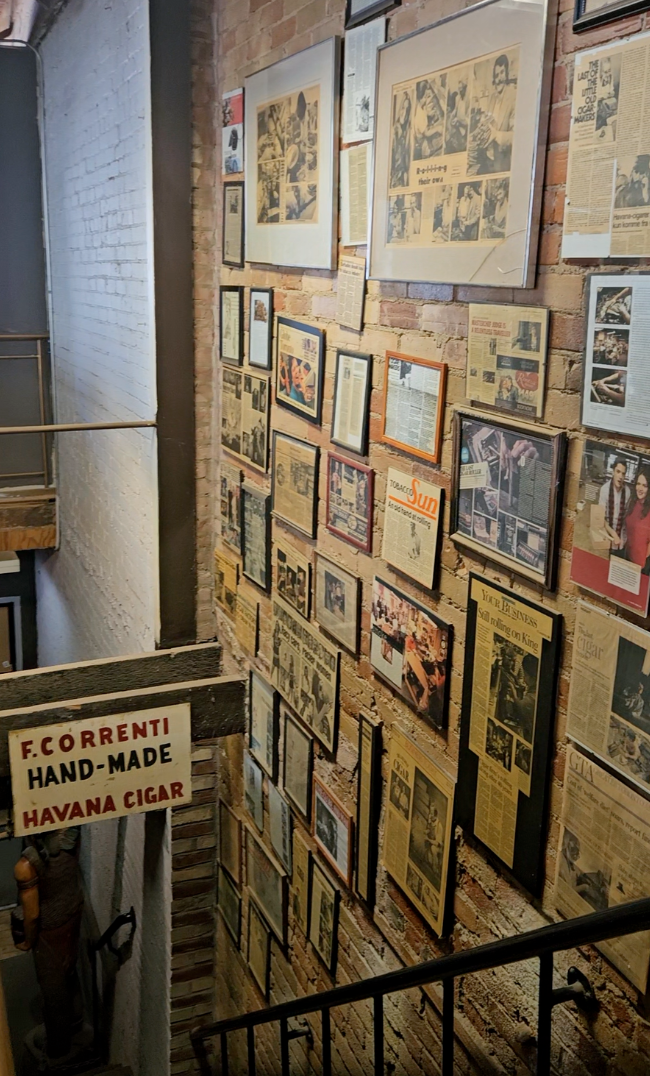
A narrow wooden staircase climbed upward into dim light with old cigar boxes, framed newspaper clippings, celebrity photos and tobacco history covering the walls. The stairs creaked under every step. Rich tobacco aroma and aged wood hit instantly before we even reached the top landing. Somewhere between the smell, the silence and the worn wood beneath our feet, it became obvious this wasn't just another cigar shop. This place felt preserved. Like time stopped somewhere upstairs decades ago and simply forgot to restart.
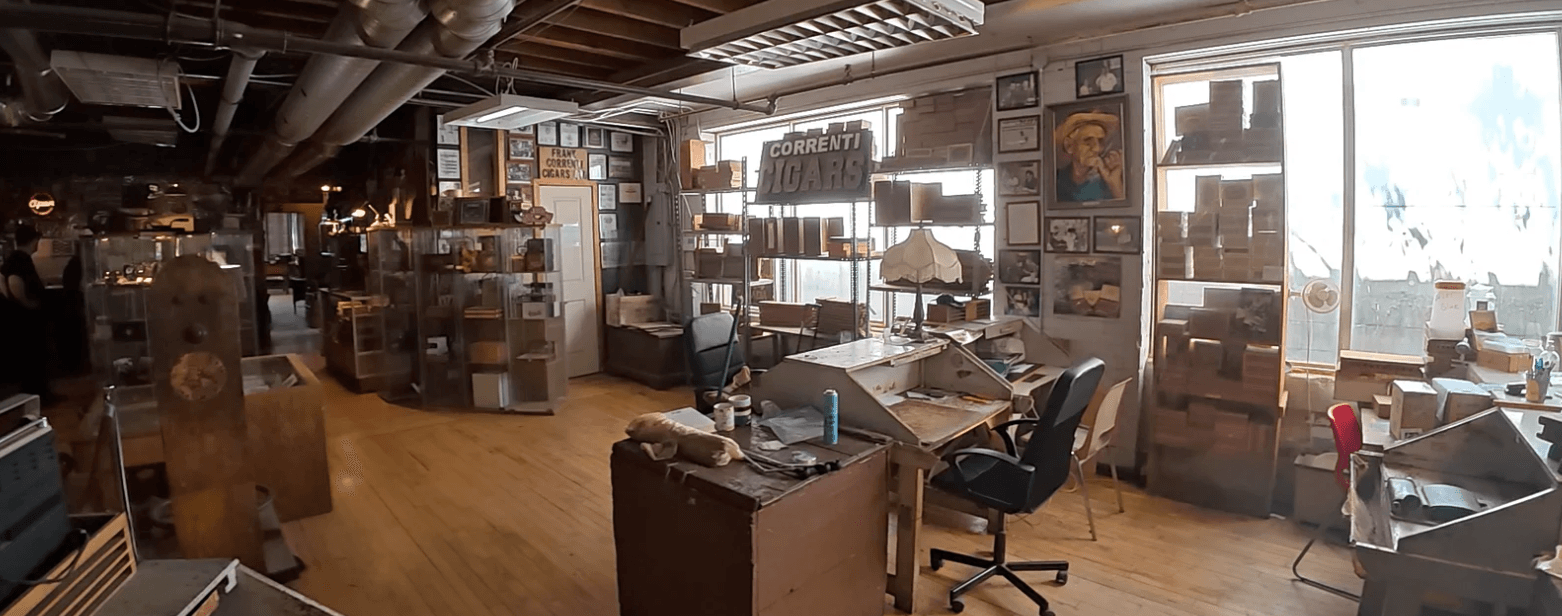
At the top of the staircase sat Canada's last remaining handmade cigar factory, still operating the same way it always had. Dim lamps cast warm yellow light over old rolling benches and glass humidors while stacks of cedar boxes lined the walls. There was no plastic shine to anything or sleek modern branding. Just tobacco, wood, old tools and history packed tightly into every corner of the room. Matt and I immediately loved it.
Four Generations of Tobacco
The deeper we got into the conversation with Kris Miller — fourth-generation tobacconist and cigar roller — the more the place transformed from cigar shop into living museum. Kris walked us through the strange tangled history that eventually became Frank Correnti Cigars. His family's cigar history actually stretches back even further than Toronto itself as a major city.
It started in Copenhagen, Denmark around 1882 when Kristian A. Moller began professionally manufacturing cigars in the era of candlelight and horse-drawn carriages. His son Kai eventually carried on the trade before immigrating to Toronto after World War II alongside thousands of other Danes searching for opportunity in North America. Kai worked for Toronto cigar manufacturers before eventually purchasing Frank Correnti Cigars alongside his wife, Ulla, and continuing the family trade in Canada.
Before Frank Correnti Cigars existed under its current name, Toronto was home to over a hundred cigar makers when it was still barely more than a township. Multiple factories eventually merged through decades of ownership changes, immigration and business deals. Victor Lopez's factory from the early 1900s became part of it. Frank Correnti himself worked under previous ownership before eventually buying the operation outright. When Correnti passed away in 1971, Kris's family purchased the company from his widow and merged the histories together into what exists today. And somehow through all of it, the factory survived.
The molds and presses still being used today are original pieces from those early factories. Kris showed us century-old cigar molds and tools sitting around the workshop like they had simply always belonged there. He explained how many of the North American companies producing cigar-making equipment disappeared during the Great Depression — leaving places like Correnti as rare surviving links to an almost vanished industry. Nothing about the process has changed either.
Mastering the Leaf
That was one of the biggest things Kris kept coming back to during our conversation. Cigars are still made the same way they were hundreds of years ago because at a certain point there simply isn't a shortcut for craftsmanship.
You have to master the leaf first.
The whole process revolves around understanding the leaf itself. Different parts of the tobacco plant create different strengths and flavors depending on sunlight exposure, age and region. Top leaves get more sun making them stronger. Lower leaves grow larger and milder in shade. Tobacco from Nicaragua behaves differently than Dominican or Cuban leaf. Canadian-grown tobacco even exists — though Kris laughed mentioning most people aren't exactly searching for Canadian cigars.
What fascinated me most was hearing how aging changes everything. Some leaf can sit for years mellowing before becoming usable. Kris told us a story about experimenting with tobacco grown in Prince Edward Island where the soil was so rich and intense the tobacco needed almost twenty years of aging before it mellowed enough to smoke properly. That level of patience feels almost impossible in modern culture. And that's really what Correnti represents. Patience, craft and time.
The Room Itself
Sitting there in the dim light surrounded by old cigar boxes and tobacco history while Kris casually rolled cigars and talked philosophy felt less like shopping and more like hanging out in someone's home. Other customers wandered in during our conversation and naturally joined the discussion. Nobody rushed in and out. Nobody seemed stressed. It immediately developed that laid-back cigar lounge energy where strangers become part of the same conversation within minutes. That atmosphere might have been my favorite part of the entire visit.
You could feel generations inside that room. Kris talked about growing up around the factory and getting yelled at by his dad for playing around instead of learning how to roll cigars properly. The roller ladies taught him the craft before his father and grandfather eventually passed the knowledge down more formally. That family continuity still exists in every corner of the shop. Even his grandfather's very first cigar rolled at fourteen years old is still preserved there.
Now when so many cities are slowly becoming interchangeable collections of glass towers, chain businesses and polished branding — Kris mentioned that directly at one point during our conversation. You can travel almost anywhere now and find the same stores, same restaurants and same experiences repeated endlessly. Places like Correnti survive because they carry authentic history that people can physically feel the second they walk through the door.
Celebrity photos, signatures and newspaper clippings cover the walls upstairs. Correnti cigars have ended up in the hands of actors, musicians, athletes and politicians for decades. Kris mentioned personally delivering custom cigars for Drake and rolling cigars connected to Wayne Gretzky among countless others. But somehow none of that felt braggy or commercialized. It just felt like another chapter in the ongoing life of the factory.
The Cigars
The cigars themselves were phenomenal. Matt and I grabbed several hand-rolled Correnti cigars for the road including thicker Churchill-style smokes Kris recommended during our conversation. Freshly rolled cigars carry a different energy entirely when you've just watched the process happen in front of you. Earth, cedar, spice and rich tobacco oils all felt more vivid knowing the cigar hadn't traveled through giant industrial systems before landing in our hands.
This is what cigars were always supposed to be. A reason to slow down, share stories and step outside of normal time for awhile.
Cigars are as much about ritual as they are the cigar itself. Sitting on a porch after work. Golf course conversations. Late-night talks with strangers. Turning your phone off for forty-five minutes and just existing somewhere.
That philosophy felt embodied by the factory itself. Everything about Correnti slows the world down. The dim lighting. The creaking floors. The smell of tobacco hanging permanently in the wood. The old lamps casting shadows over rolling benches where the same process has repeated itself for generations.
At one point Kris admitted that modern regulations, inspections and paperwork can sometimes feel overwhelming trying to preserve a business like this in today's world. But then an old customer will walk through the door leaning on a cane and say something like, "I used to come here with my father when I was a boy. I just wanted to see it again." That right there is the reason places like this matter.
Frank Correnti Cigars isn't just a cigar shop. It's living history hidden above Spadina Avenue. A surviving piece of Toronto craftsmanship stubbornly refusing to disappear.
Frank Correnti Cigars correnticigars.com · Map 206 Spadina Ave, 2nd Floor, Toronto, ON M5T 2C2