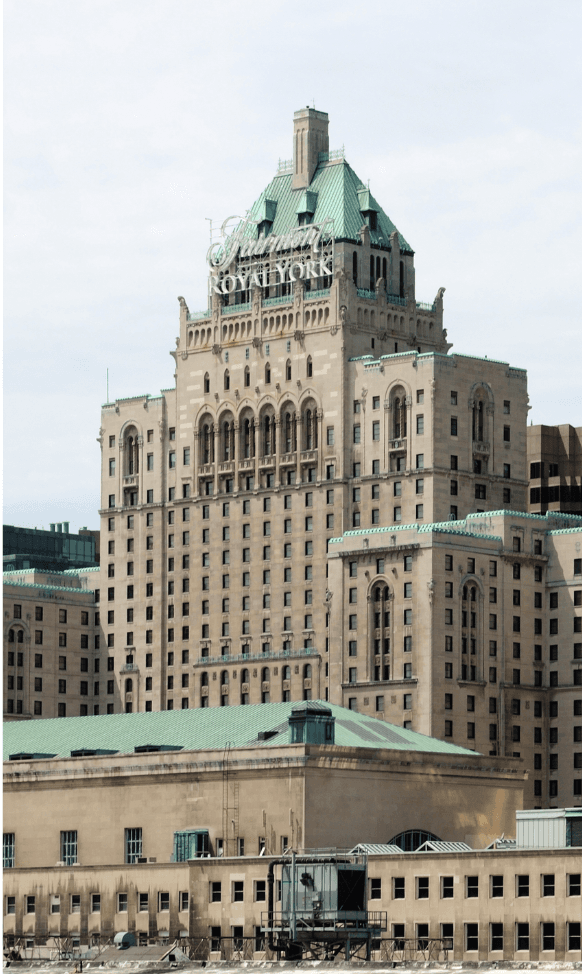
Unfamiliar with Toronto, I was completely unprepared for the grandeur, history, and hidden stories behind the Fairmont Royal York Hotel on the south side of the city's financial district. Designed by the acclaimed architectural team of Ross and Macdonald in collaboration with Henry Sproatt, the building is an enduring symbol of Canadian elegance and craftsmanship. Coming from Las Vegas, the land of luxury hotels, I thought I had seen it all. But this was something entirely different. Less spectacle, more substance. The Royal York is real, storied, and unapologetically grand — with an opulence rooted in history, not flash — and almost 1,400 guest rooms.
Opened in 1929 and briefly the tallest building in the British Empire, the hotel has since hosted royalty, rock stars, and more. At street level, the exterior offers only a glimpse of the past it holds. For locals, it's a familiar gargoyle-topped Châteauesque silhouette on the skyline. We were lucky enough to receive a behind-the-scenes tour, and what we discovered went far beyond what meets the eye.
The Architecture
The Châteauesque style becomes unmistakable once you know what to look for: elaborate ornamentation, towers, spires, asymmetry, and complex rooflines with facades that advance and recede. To understand the inspiration, look no further than the castles of France's Loire Valley — 15th to 17th century structures that set the tone for what this style would become.
As we stepped inside, Art Deco influences took over. Marble everywhere. Intricately detailed arches. Gilded ceilings. It made immediate sense why Queen Elizabeth II, Winston Churchill, Frank Sinatra, Robert F. Kennedy, Reagan, and the Dalai Lama have all stayed here. The ceilings soared, and the open lobby housed an elegant bar with a jazz pianist called Clockwork that felt like it belonged in another era. Filming for The Boys, American Gods, The Handmaid's Tale, and Adam Sandler's You Are So Not Invited to My Bat Mitzvah all took place in the Imperial. The Fairmont Royal York isn't just a hotel. It's a cultural landmark — a living piece of Canadian history that continues to shape the city around it.
The Imperial Room
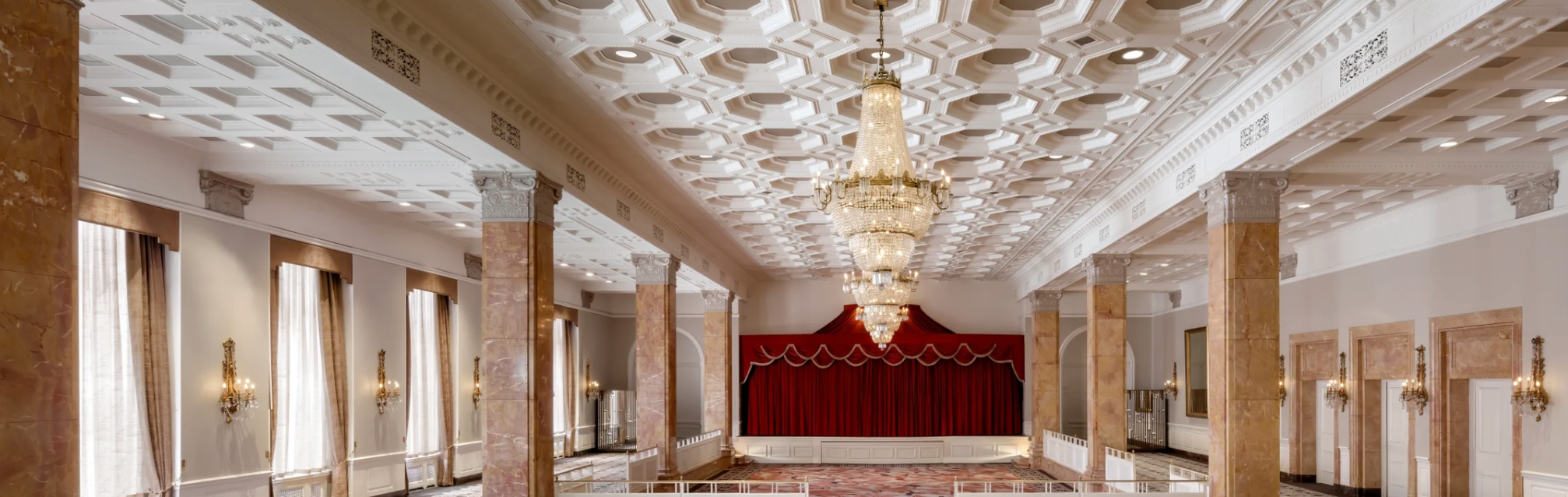
Our tour began just outside the legendary Imperial Room, once Toronto's most celebrated and exclusive supper club. The arches of the ceiling were specifically designed to prevent sound from escaping — an acoustic solution built into the architecture itself.
Spanning over 5,000 square feet with floor-to-ceiling wraparound windows, the room was designed for spectacle: a tiered layout and a permanent stage that hosted some of the most iconic performances in Canadian nightlife history. In its prime, this was the city's cultural heartbeat, where elegance wasn't optional but enforced. A strict dress code ruled the entrance; dinner jackets were mandatory for gentlemen.
Even Mick Jagger was turned away at the door for refusing to wear a jacket. When offered a loaner, he snapped, 'Do you know who I am?' The maître d' Louis Jannetta replied: 'Yes, Mr. Jagger, and you still need a jacket.'
Bob Dylan didn't fare much better — denied entry for showing up without a tie by the same maître d', who was known for upholding the club's uncompromising standards. Inside, the ghosts of a golden era still linger, from the faint, sweet aroma of cigar smoke to the echoes of Ella Fitzgerald and Duke Ellington, who once graced the stage. While it's now an event space, the Imperial Room remains a monument to a time when style, sophistication, and live music ruled the night.
The Ballroom and the Executive Floor
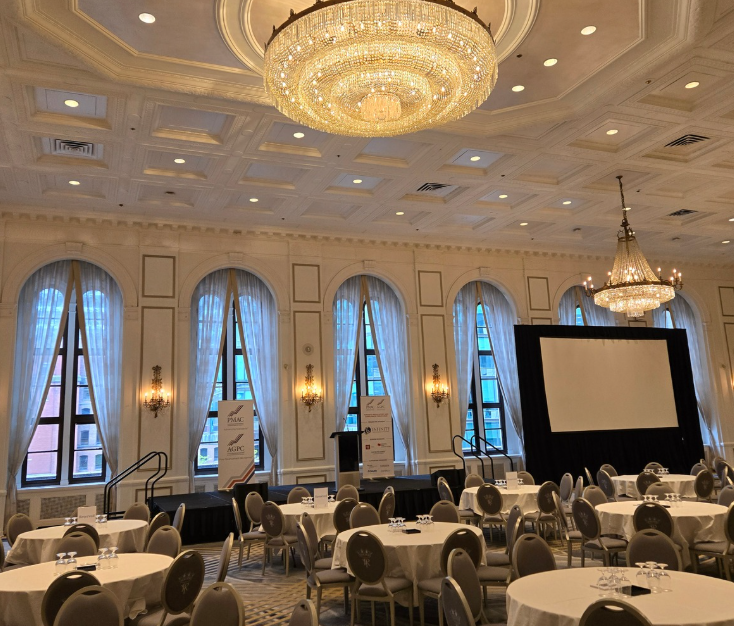
From the Imperial Room we moved to the C Floor, home to the hotel's largest event spaces. The Ballroom is an Italian-inspired masterpiece with a grand oil-painted fresco on the ceiling and glittering chandeliers. One wall was entirely windows, flooding the room with natural light and revealing its architectural details in full. Widely considered one of the most photographed rooms in Toronto, it hosts weddings and high-end functions — at around $75,000 CAD for the 4,600 square foot space, it's reserved for very special occasions.
From there, we ascended to the 19th floor: a private executive level designed for board meetings and discreet gatherings. The entire floor was traditional and wood-paneled, rich in old-world charm — more like stepping into a classic private club or film set than a modern hotel. Each of the six salons is outfitted with antique furniture, upholstered chairs, and immaculate finishes. Even the vintage phone rooms still existed, now with modern hardware but still echoing the hotel's past. This is where serious business gets done, quietly and in style.
The Hidden Rooms
As we moved through the hotel's many concealed halls and staircases, we learned about the "Provincial Rooms" — each one uniquely themed using materials and artistry from the Canadian province it represents. Another room we heard about but didn't visit was The Library: originally the hotel's own library, now an event space with floor-to-ceiling glass-covered bookshelves that would stop any history or literature lover cold.
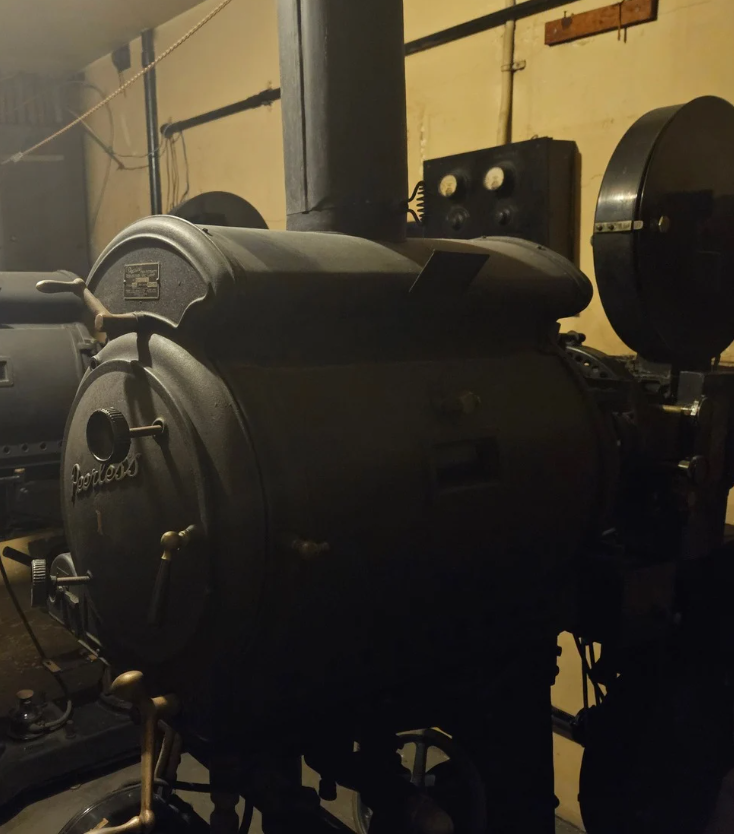
Then came one of the most unexpected highlights of the tour. Tucked away up a small side stairwell, behind an unmarked door, we stepped into what felt like a time capsule. Inside sat two massive cast-iron Peerless-branded film projectors — relics from the early days of cinema. This private screening room was once used to show the latest "talkies" to select guests. We could almost picture Charlie Chaplin flickering across the screen while reels were spliced in the adjacent editing station. The room has since been sealed off but preserved in its original state — a quiet tribute to a forgotten chapter of the hotel's cinematic past. Rumor has it there's a second projection room hidden elsewhere in the building, containing equipment from the 1960s.
The Penthouse
Moving through the service elevators used by hotel staff and high-profile guests alike — where Hugh Jackman, Salma Hayek, and Angelina Jolie had all passed discreetly — we arrived at one of the final destinations on our tour: the Royal York's penthouse suite.
The double doors opened onto a marble-floored foyer, lights flickering on automatically as we stepped in. Stone and granite finishes. Sleek modern design. A concealed bar hidden behind elegant paneling. The guest bedroom alone rivaled most luxury suites, with a massive walk-in closet and a bathroom featuring an aromatherapy shower. In the main living space, an enormous 20-foot dining table sat beneath a dazzling chandelier.
When members of the Royal Family stay here, both the mattresses and toilets are swapped out.
The master bedroom outshone even the guest space with its stately bed, expansive layout, and rich décor. With a full-service kitchenette — the largest in the hotel — and a separate entrance for staff, the suite was as functional as it was glamorous. We guessed its nightly rate and still undershot by thousands. At $15,000 CAD per night, the Royal York's penthouse is a true indulgence. Standing there, it wasn't hard to see why.
The Rooftop
I didn't know where we could go that could possibly top the penthouse. Then we literally went higher.
Several flights of stairs and one double-locked door later, we stepped out onto the 28-story rooftop of the Fairmont Royal York, directly beneath its glowing red neon sign. I ran my hand along the griffin-headed grotesques perched on each corner of the rooftop's edge — lion-bodied, eagle-faced sentries watching over the city. These mythical figures are more than decoration. They're symbolic guardians rooted in Gothic architecture, meant to protect the building's inhabitants. On their backs, each bore a mason's mark — subtle etchings left behind by the stonecutters who carved them. Toronto's heritage, preserved in stone.
Nearby, our guide pointed out where Jim Morrison scratched his name into the copper roof in 1967. On a neighboring rooftop fifteen stories below, eight beehives produced nearly 400 pounds of honey a year for use across the hotel's restaurants and bars. The CN Tower stood tall to our right, and the whole of Toronto stretched toward Lake Ontario ahead of us. It was the perfect final view — a panoramic moment at the top of the city.
Our tour was entirely unplanned and serendipitous — the product of having met our guide the day before at another event. I couldn't have been luckier to experience one of Canada's grand railway hotels from this rare, behind-the-scenes perspective. Most guests may never see half of what we did, unaware of the many secrets and storied layers folded into its walls.
Modern comfort in preserved grandeur sums up the Fairmont Royal York. A crossroads of luxury, history, functionality, and culture. Less a hotel, more a living, timeless museum.
Fairmont Royal York fairmont.com/royal-york · Map 100 Front St W, Toronto, ON M5J 1E3