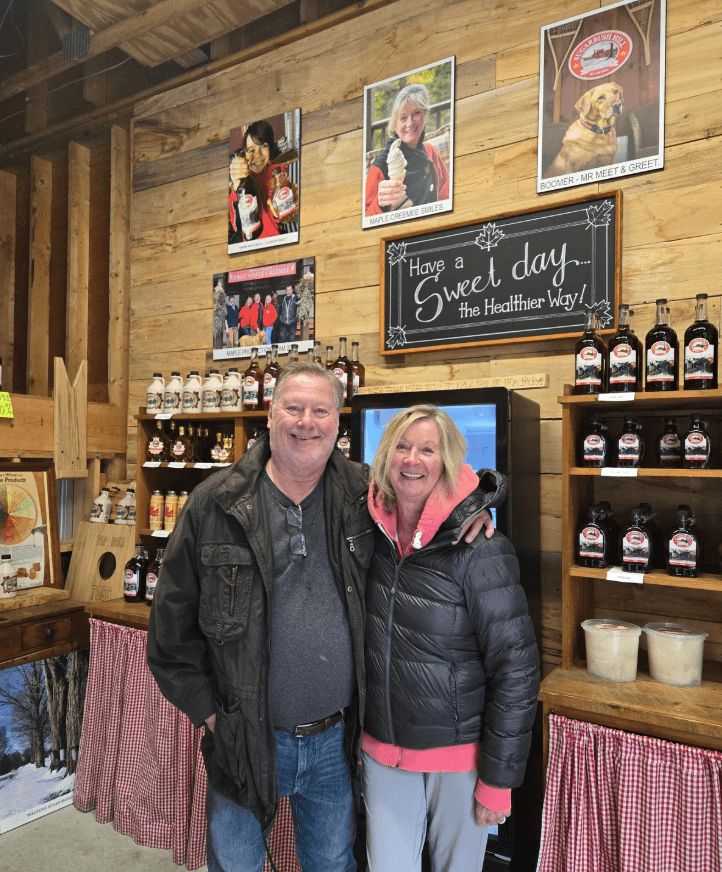
Nestled into the rocky landscape of Huntsville, Ontario, Sugarbush Hill Farm is more than just a maple syrup producer — it is a showcase of heritage, legacy, and dedication. Located at 2389 Muskoka Rd. #10, the farm welcomes visitors to a sugar shack that feels both historic and alive. From the moment you step inside, it's clear this is a place where tradition has been preserved and appreciated to its utmost. I immediately had a hundred questions and wanted to learn about every tool and piece of equipment I could see.
On the day of our visit, Rob and I were greeted with a smile by Tom and Eva, whose warmth and pride in their work were unmistakably infectious. Despite the dreary weather, the farm itself radiated energy and Tom and Eva were more than happy to showcase their wide selection of products and the love that went into them. The sugar shack, with its mix of weathered beams, old tools, and gleaming evaporators, seemed to tell its own story — one of generations past and of careful modernization that has kept the craft relevant today.
Inside the Sugar Shack
Stepping into the shack, I was struck by how much history surrounded us. It wasn't just a workspace — it felt like a museum that was still very much alive. The air carried a deep sweetness of maple that paired perfectly with the damp scent of wood and metal.
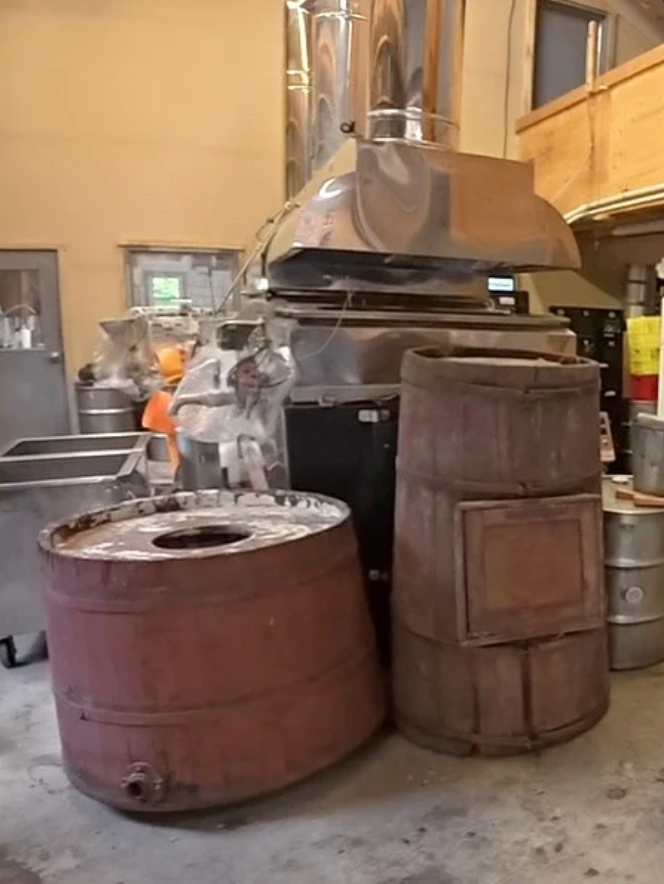
Vintage evaporators and old tools lined the walls, while educational displays explained the intricate process of turning sap into syrup and the science it entailed. At the same time, the gleam of modern equipment reminded us that this shack was far from obsolete — it was fully operational and had so blatantly and carefully blended trusted traditional methods with necessary innovation.
As Rob and I moved through the shack, we could sense that every detail carried meaning. Weathered barrels and evaporators sat alongside antique tools, telling a story of the history and evolution of a process pioneered and perfected over thousands of years by Canada's indigenous community. It was clear that Sugarbush Hill wasn't built to imitate tradition; it was rooted in it.
Tom lovingly shared how he and his late wife, Pauline, first began this dream after retiring from Air Canada. Drawing from Pauline's family history with cabanes à sucre in Quebec — the heartland of Canada's maple syrup industry — they carried that tradition north into Muskoka. Today, Tom continues the work with his family, carrying Pauline's legacy forward in every batch of syrup that flows from the farm.
The Art of Maple Syrup Making
As Tom led us deeper into the heart of the shack, his enthusiasm was contagious. Standing before the giant evaporators, he explained the boiling process with precision.
To refine rather than create is truly a beautiful thing. We don't add anything — just heat, time, and care.
As we listened, it occurred to me that the process Tom has dedicated his life to is one of the closest things we get to true alchemy. Sap flows in as a clear, almost watery liquid, and through heat, time, and patience, it emerges as golden syrup. No shortcuts, no additives — just transformation. Pure magic.
What struck me most was the balance Tom had found between honoring tradition and embracing technology. He spoke about the importance of speed and precision — how sap begins to change the moment it leaves the tree, and how careful cooling and rapid processing can make all the difference in quality. Yet even as he described these technical details, his focus always circled back to passion, respect for the trees, and the simple joy of watching nature do its work.
Being there, listening to him, I realized it wasn't just about syrup. It was about devotion to a craft, and the quiet pride of doing something the right way — even when the easier way is a true temptress.
What Makes Sugarbush Hill Unique
As Tom spoke, it became clear that Sugarbush Hill isn't just any maple syrup farm. In fact, it's one of only a handful of large-scale producers outside of Quebec — an aspect that adds to its intrigue and prestige. As a connoisseur of anything, rarity is part of the magic: when something is scarce, it is objectively more valuable, and when it also peaks the senses, everyone will need to have it.
Tom explained how Canadian syrup is carefully graded, and I found myself back in school frantically scribbling notes as he talked. Most people only know about the syrup that ends up on their plates, but the classifications run deeper. Canada's standards are strict, and to meet Grade A standards, syrup must satisfy all of the following: uniform color throughout the bottle; clarity with no cloudiness or sediment; no objectionable taste or odor — just pure maple flavor; no signs of fermentation; and a sugar content between 66% and 68.9%.
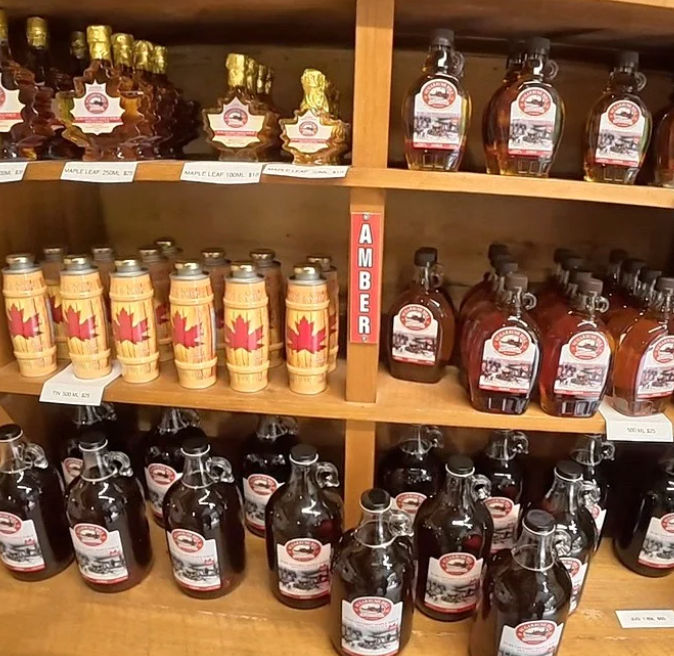
Within Grade A, there are four distinct sub-categories: Golden, Amber, Dark, and Very Dark. Each has its own personality, but Very Dark is the rarest and most sought-after by true maple enthusiasts. Rich, bold, and complex, it's syrup that speaks less to pancakes and more to connoisseurs searching for depth.
Hearing Tom describe these nuances felt a bit like listening to a winemaker discuss vintages or a coffee roaster talk beans. This wasn't just syrup — it was an art form, rooted in rarity, science, and a deep respect for nature.
Our rocky slopes intertwine with the freshest spring water Muskoka has to offer. Our babbling brooks make this the ideal place for sugar maple growth.
The Science Behind the Sweetness
Just when I thought I understood maple syrup, Tom pulled back another curtain. Sap, he explained, isn't just sugar water — it's a living mixture of water, minerals, antioxidants, vitamins, and natural compounds that give maple syrup its unique character. But it's fragile. The moment sap leaves the tree, it begins to change, which is why timing and temperature are critical. Quick cooling and rapid processing are the keys to capturing its purity.
One detail that fascinated me is the research coming out of Laval University. Scientists there have studied maple sap's natural compounds, including a phytohormone called abscisic acid (ABA). While it might sound complex, its role is surprisingly practical: ABA helps regulate insulin and increase the body's sensitivity to it. In other words, maple syrup doesn't just taste incredible — it may also have potential health benefits, particularly in fighting metabolic syndrome and diabetes.
It was striking to realize that something so ancient and traditional is also part of modern scientific conversations. Maple syrup has always been celebrated for its flavor, but here at Sugarbush Hill, you get the sense that its story runs deeper — bridging heritage and health in a way that feels both timeless and forward-looking.
Beyond the Bottle
Sugarbush Hill Farm is more than a place where syrup is made — it's an experience. The shelves are lined with homemade products, each carrying its own story. Bespoke tools and historic artifacts hang beside modern equipment and technology, creating a space that feels equal parts educational display, working farm, and living history. Even the logo carries meaning, designed by local artist and sugar maker Mary Chaikowsky, tying the farm's identity back into the fabric of the community.
Walking through, I felt a sense of balance — between past and present, tradition and technology, passion and precision. It reminded me that maple syrup isn't just a commodity; it's a craft, and in Muskoka, Sugarbush Hill stands as a rare example of that craft practiced at the highest level outside Quebec.
May your sap run strong and sweet.
As Tom shared stories, I understood why syrup makers often say this to one another. It's not just a good-luck wish — it's a reminder that this work is tied to nature, rhythm, and respect.
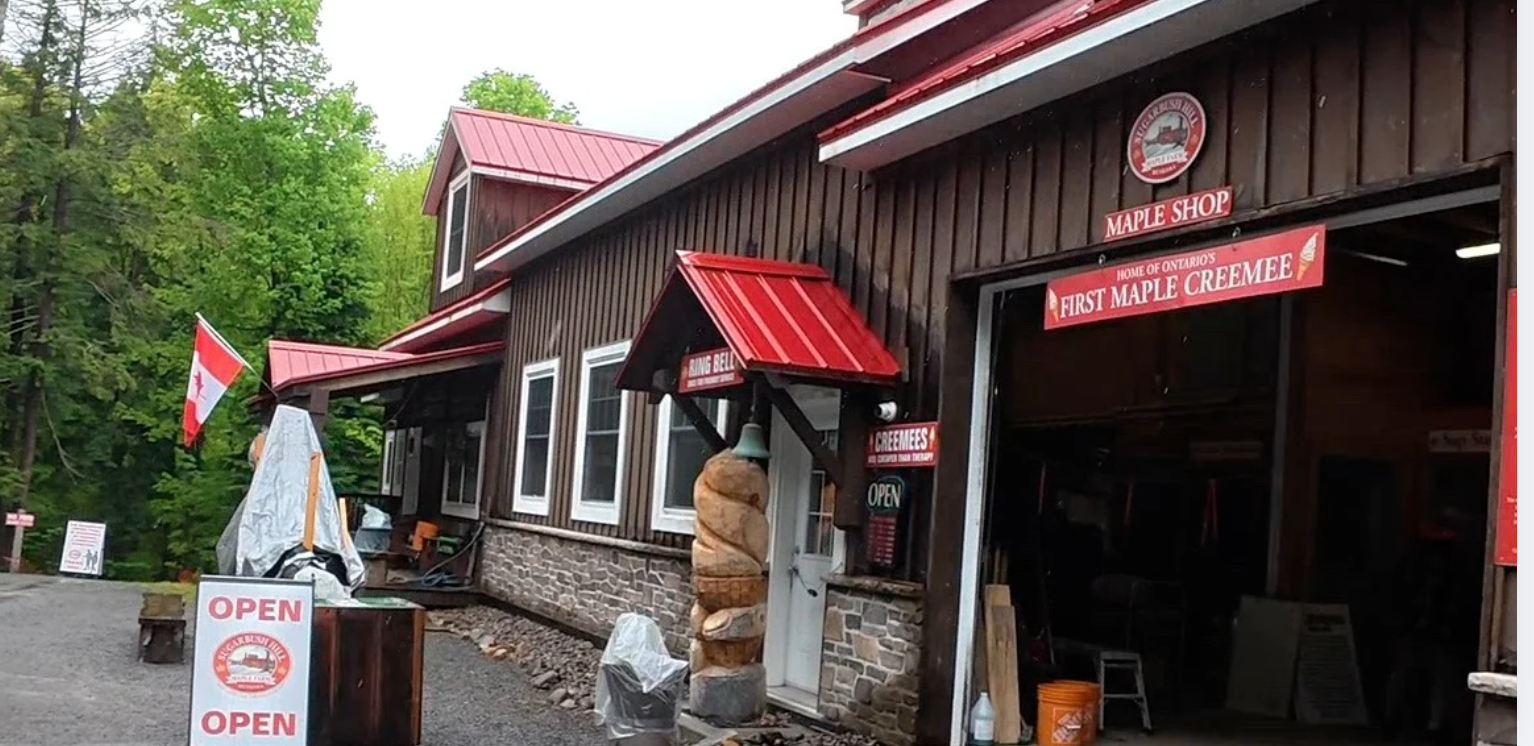
For anyone passing through Muskoka, a visit here is more than worth the stop. Whether you're a casual pancake lover or someone chasing the rare grade, Sugarbush Hill Farm offers up authenticity, passion, and a taste of maple at its very best.
Sugarbush Hill Farm
sugarbushhill.com · Map
2389 Muskoka Rd. #10, Huntsville, ON P1H 2J3